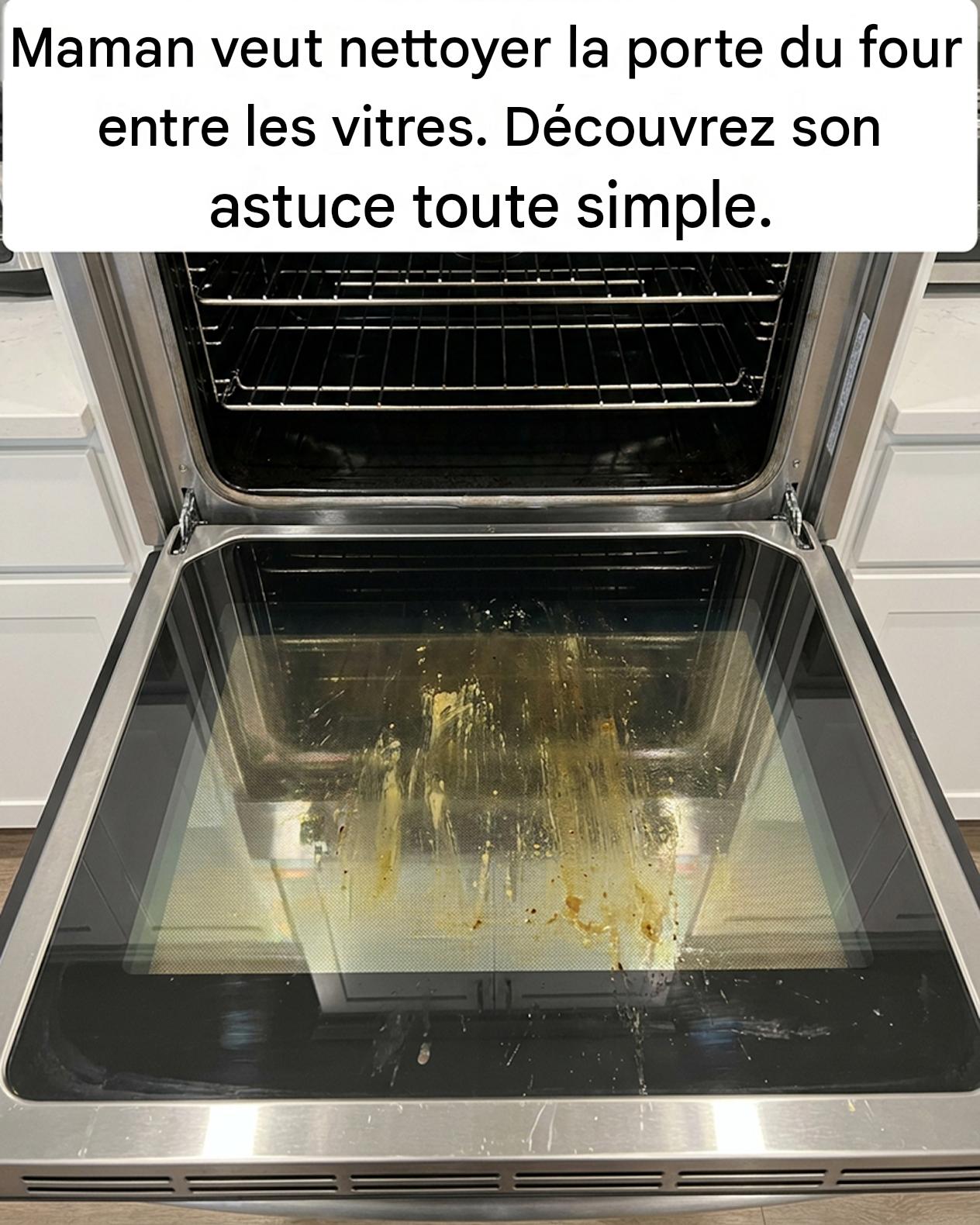
1. Pourquoi la graisse reste-t-elle piégée ?
Les portes de four modernes utilisent des doubles ou triples couches de verre séparées par des lames d’air pour isoler et maintenir la surface extérieure plus froide. Ce système améliore l’efficacité énergétique et la sécurité, mais présente un inconvénient : les couches ne sont pas parfaitement étanches.
Small vent openings around the edges of the door—often along the bottom lip—allow air circulation. This is intentional to help cool the door. However, these vents also let in grease vapors, steam, and fine food particles every time the oven heats up.
When you cook fatty or greasy foods, tiny droplets of grease become airborne. Some of these particles enter the gaps between the glass panes and settle there. Since you cannot wipe this internal surface during routine cleaning, a cloudy, amber film gradually forms over months or years.
This is a normal aspect of most oven doors from leading brands such as GE, Whirlpool, Samsung, and Bosch. It is not a manufacturing defect or poor maintenance—it’s simply how the door’s ventilation system works.
2. Warranty and Repair Costs
Facing grease trapped inside the oven door glass, many homeowners rush to schedule a repair or consider replacing the door. However, this can quickly become costly.
Technician service calls typically cost between $150 and $350 just for diagnosis, with additional charges for parts and labor. Replacing the entire oven door often runs between $200 and $400, depending on your oven model. For high-end or wall ovens, the price can be significantly higher, especially if installation is included.
Before paying for repairs or ordering parts, it’s important to check whether disassembling the door yourself could void your manufacturer’s warranty or any extended appliance protection plan you may have purchased. Many warranties explicitly state that unauthorized door disassembly will cancel coverage.
Additionally, some homeowner or appliance protection plans cover such repairs, potentially saving you hundreds of dollars. Reviewing your warranty documents or contacting the provider before attempting any fixes can protect your investment.
Continue Reading on the Next Page